
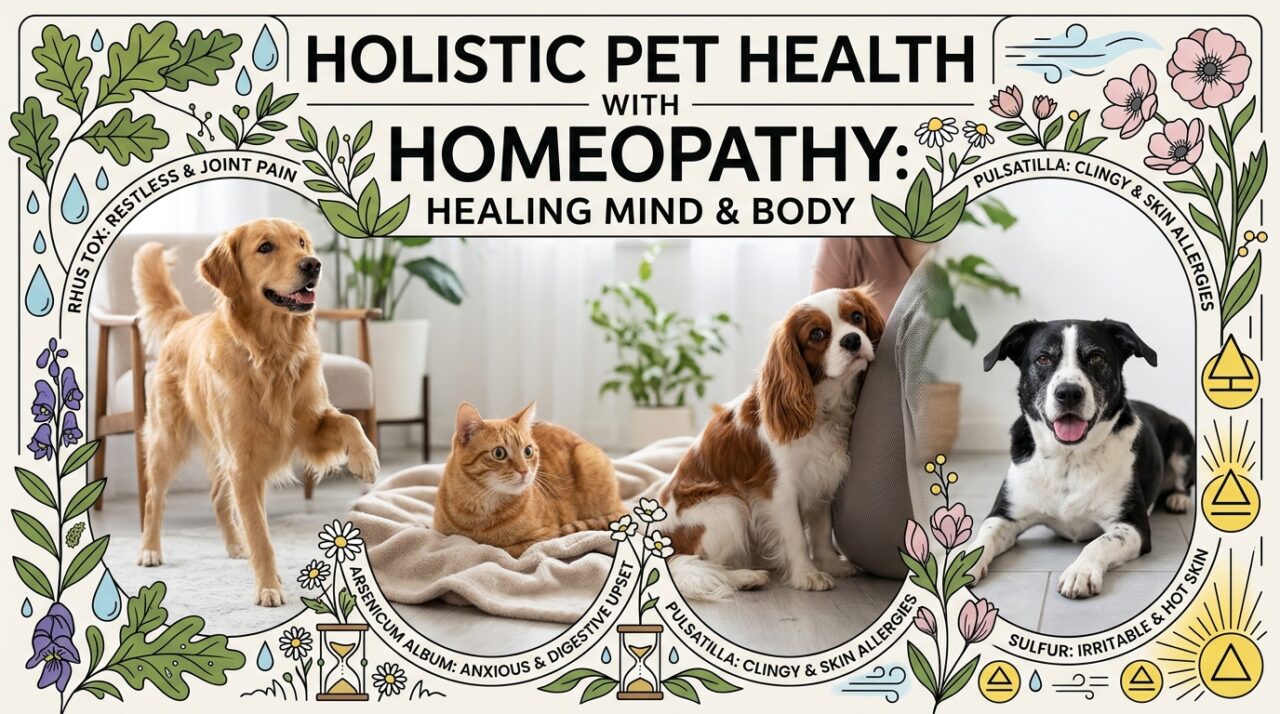
As pet owners, we often notice when our dogs and cats are not feeling their best. However, healing involves more than just addressing physical symptoms. Homeopathy, a holistic system of medicine, operates on the principle that the mind and body are interconnected. For animals, this means that their emotional state, temperament, and unique personality traits are just as important as their physical symptoms when selecting a treatment.
By finding a "constitutional remedy"—a remedy that matches your pet’s overall physical and emotional profile—homeopathy aims to stimulate the body’s natural self-healing mechanisms and strengthen the immune system.
Here is how observing your pet's mind, emotions, and behavior can help address five of the most common health conditions in dogs and cats.
The Role of Observation: Understanding Your Pet’s Personality
Unlike humans, animals cannot speak to describe their pain or anxiety. Instead, they communicate through behavior. To find a constitutional remedy, homeopaths rely on the owner’s detailed observations.
When your pet is unwell, consider the following questions:
- Temperament: Are they naturally timid, independent, or attention-seeking?
- Response to Illness: Do they seek comfort and cling to you, or do they hide in a dark, quiet corner?
- Environmental Preferences: Do they seek warmth, or do they pant and look for cool tile floors?
- Triggers: Does their condition worsen with movement, changes in weather, or loud noises?
Addressing the Top 5 Common Diseases through Homeopathy
1. Atopic Dermatitis & Skin Allergies
Skin issues, such as itching, redness, and hot spots, are common in both dogs and cats. While conventional treatments often suppress these symptoms, homeopathy looks at the underlying imbalance.
- The "Pulsatilla" Profile (Clingy and Warm): If your dog or cat has itchy skin, seeks constant reassurance, dislikes warm rooms, and craves fresh air, Pulsatilla may be considered. These pets are often gentle, mild-tempered, and rarely thirsty.
- The "Sulfur" Profile (Irritable and Hot): If your pet has smelly, red, irritated skin, seeks cool places, and is prone to skin eruptions that get worse with heat or bathing, Sulfur is a common constitutional remedy. These animals are often headstrong and independent.
2. Osteoarthritis & Joint Pain
Mobility issues and joint stiffness are frequent as pets age. Homeopathy categorizes joint pain based on how movement and weather affect the animal's comfort.
- The "Rhus Toxicodendron" Profile (Restless and Stiff): This remedy is often indicated for pets whose stiffness is worse when they first get up but improves as they keep moving. They are typically restless, especially at night, and their pain is often aggravated by cold, damp weather.
- The "Bryonia" Profile (Quiet and Still): In contrast, a pet requiring Bryonia dislikes movement. They prefer to lie completely still because any motion causes pain. These pets are often irritable when disturbed and can be intensely thirsty.
3. Gastrointestinal Disorders (Sensitive Stomach & Vomiting/Diarrhea)
Digestive upsets can be triggered by dietary changes, toxins, or stress. Homeopathy matches the digestive symptoms with the animal's nervous system response.
- The "Nux Vomica" Profile (Tense and Impatient): Suitable for pets with a sensitive stomach who are prone to cramping, constipation, or vomiting. Physically, they may look tense. Behaviorally, they are often high-strung, easily irritated, and sensitive to noise and light.
- The "Arsenicum Album" Profile (Anxious and Chilly): If the digestive issue is accompanied by extreme anxiety, restlessness (pacing from spot to spot), and a strong desire for warmth, Arsenicum Album is often considered. These pets are typically very clean, fastidious, and drink small sips of water frequently.
4. Anxiety & Stress-Related Behaviors
Separation anxiety, fear of thunderstorms, and behavioral changes can severely impact a pet’s immune system.
- The "Phosphorus" Profile (Social and Fearful): Pets that benefit from Phosphorus are usually affectionate, outgoing, and highly sensitive to their environment. They love attention but are easily terrified by sudden loud noises like thunder or fireworks.
- The "Aconite" Profile (Sudden Panic): This is often used for acute, intense fear or panic that comes on suddenly—such as after a sudden fright or a visit to the vet. The animal may show dilated pupils and try to escape in a state of panic.
5. Lower Urinary Tract Issues & Kidney Diseases
Feline Lower Urinary Tract Disease (FLUTD) in cats and kidney insufficiency in older pets are often linked to chronic stress and systemic imbalance.
- The "Lycopodium" Profile (Insecure but Dominant): Often suited for pets that lack self-confidence but try to dominate weaker animals or family members. They may show urinary issues alongside digestive bloating and flatulence. They typically prefer warm food and water.
- The "Cantharis" Profile (Intense Irritation): If there is severe, painful straining during urination (often seen in cystitis), Cantharis is a common choice. The animal may appear highly agitated, restless, and distressed due to the physical discomfort.
Supporting Immunity from Within
Homeopathy does not aim to replace emergency veterinary care, but rather serves as a supportive approach to restore balance. By matching a remedy to your pet’s unique emotional and physical profile, homeopathy aims to strengthen their natural immune response, helping them build resilience against future illnesses.
If you are interested in exploring homeopathy for your pet, keeping a detailed journal of their behavior, mood changes, and physical symptoms is an practical first step. Consulting with a qualified veterinary homeopath can help guide you toward the appropriate constitutional support for your animal companion.
了解毛孩的身心靈:寵物順勢療法的整體整合調理
作為寵物主人(毛爸媽),我們很容易察覺到狗狗和貓咪身體不適。然而,真正的康復不僅僅是消除身體上的症狀。順勢療法(Homeopathy)是一種整體自然療法,其核心原則是「身心一體」。對於動物而言,在選擇適合的療方時,牠們的情緒狀態、脾氣和獨特的性格特徵,與身體症狀同樣重要。
透過尋找「體質處方」(Constitutional Remedy)——即與寵物整體生理和心理特徵相契合的療方——順勢療法旨在激發動物體內的自癒機制,從而提升其自身的免疫系統。
以下將探討主人如何透過觀察毛孩的心智、情緒與行為,協助應對犬貓常見的五大疾病。
觀察的角色:解讀寵物的性格密碼
與人類不同,動物無法用語言表達自己的痛苦或焦慮,牠們的行為就是牠們的語言。為了找出最適合的體質處方,順勢療法獸醫非常依賴主人細緻的觀察。
當您的寵物身體不適時,您可以嘗試觀察以下幾點:
- 天性脾氣: 牠們天生是膽小、獨立,還是喜歡黏人?
- 生病時的反應: 牠們會尋求安慰、一直黏著你,還是會躲在陰暗安靜的角落?
- 環境偏好: 牠們喜歡溫暖的地方,還是會氣喘吁吁地尋找冰涼的地磚?
- 誘發因素: 牠們的症狀會因為活動、天氣變化或噪音而加劇嗎?
從性格特質看犬貓常見五大疾病
1. 異位性皮膚炎與皮膚過敏 (Atopic Dermatitis & Skin Allergies)
皮膚搔癢、紅腫和濕疹是犬貓非常常見的健康問題。常規療法多以藥物壓制症狀,而順勢療法則著重於調理內在的失衡。
- 「白頭翁」(Pulsatilla) 體質(黏人且怕熱): 如果您的寵物皮膚搔癢,極度需要安全感與陪伴,討厭悶熱的房間並渴望新鮮空氣,可考慮使用 Pulsatilla。這類寵物通常性格溫和,而且不愛喝水。
- 「硫磺」(Sulfur) 體質(易怒且體熱): 若寵物的皮膚有異味、紅腫發炎,且極度怕熱、喜歡尋找涼爽的地方,皮膚狀況在受熱或洗澡後惡化,Sulfur 是常見的體質藥物。這類動物通常比較有主見和獨立。
2. 退化性關節炎與關節疼痛 (Osteoarthritis & Joint Pain)
隨著寵物年齡增長,關節僵硬和行動不便變得很普遍。順勢療法會根據活動和天氣如何影響動物的舒適度來分類關節疼痛。
- 「野葛」(Rhus Toxicodendron) 體質(越動越舒緩): 此療方適用於起步時關節最為僵硬,但活動開來後疼痛反而有所改善的寵物。牠們通常顯得焦躁不安(特別是在夜間),且關節在寒冷、潮濕的天氣裡會更加不適。
- 「瀉根」(Bryonia) 體質(喜靜忌動): 相反,需要 Bryonia 的寵物非常討厭活動。牠們寧願完全靜臥,因為任何輕微的移動都會帶來痛楚。這類寵物在被打擾時容易煩躁,並可能伴有極度口渴的表現。
3. 腸胃不適(敏感性胃腸、嘔吐與腹瀉)
飲食改變、中毒或壓力都可能引起消化系統紊亂。順勢療法會將消化道症狀與動物的神經系統反應相結合進行評估。
- 「馬錢子」(Nux Vomica) 體質(緊張與急躁): 適用於胃腸敏感、容易出現腹部痙攣、便秘或嘔吐的寵物。在行為上,牠們通常處於神經緊張狀態,容易急躁,且對噪音和光線非常敏感。
- 「砷」(Arsenicum Album) 體質(焦慮與怕冷): 如果腸胃問題伴隨著嚴重的焦慮、坐立不安(在屋子裡走來走去)以及極度怕冷,Arsenicum Album 是常考慮的處方。這類寵物通常有潔癖、愛乾淨,並習慣頻繁地小口喝水。
4. 焦慮與壓力相關行為 (Anxiety & Behavioral Stress)
分離焦慮、雷雨恐懼症以及行為改變會顯著影響寵物的免疫系統。
- 「磷」(Phosphorus) 體質(社交型但易受驚): 適合 Phosphorus 的寵物通常非常友善、外向,且對周圍環境極其敏感。牠們渴望得到關注,但很容易被突如其來的巨響(如雷聲或煙花)嚇壞。
- 「烏頭」(Aconite) 體質(突發性恐慌): 常用於突發且劇烈的恐懼或恐慌狀態——例如受到突如其來的驚嚇或看獸醫時。此時動物可能會出現瞳孔放大,並在極度恐慌中嘗試逃跑。
5. 下尿路疾病與腎臟疾病 (Lower Urinary Tract Issues & Kidney Diseases)
貓咪常見的下尿路綜合症 (FLUTD) 和老年犬貓的腎功能不全,往往與長期壓力和系統性失衡有關。
- 「石松」(Lycopodium) 體質(外強中乾): 通常適用於缺乏自信,卻試圖對家裡較弱小的動物或成員表現出支配欲的寵物。牠們可能同時有尿路問題和消化道脹氣。牠們一般偏好溫熱的食物和水。
- 「西班牙蒼蠅」(Cantharis) 體質(強烈刺激感): 如果寵物在排尿時表現出嚴重且痛苦的掙扎(如急性尿道炎),Cantharis 是常見的選擇。由於身體的極度不適,動物會顯得非常煩躁、不安且痛苦。
從內在提升免疫力
順勢療法並非旨在取代緊急獸醫醫學,而是作為一種溫和的輔助支持,幫助身體恢復內在平衡。透過尋找與寵物獨特身心特徵相匹配的體質處方,順勢療法旨在引導牠們重建自身的免疫防禦,從而提升對抗疾病的韌性。
如果您希望為寵物探索順勢療法,第一步可以嘗試詳細記錄牠們的日常行為、情緒變化以及身體症狀。諮詢合資格的專業獸醫順勢療法師,將有助於為您的愛寵量身定制最適合的體質調理方案。