
(中文)
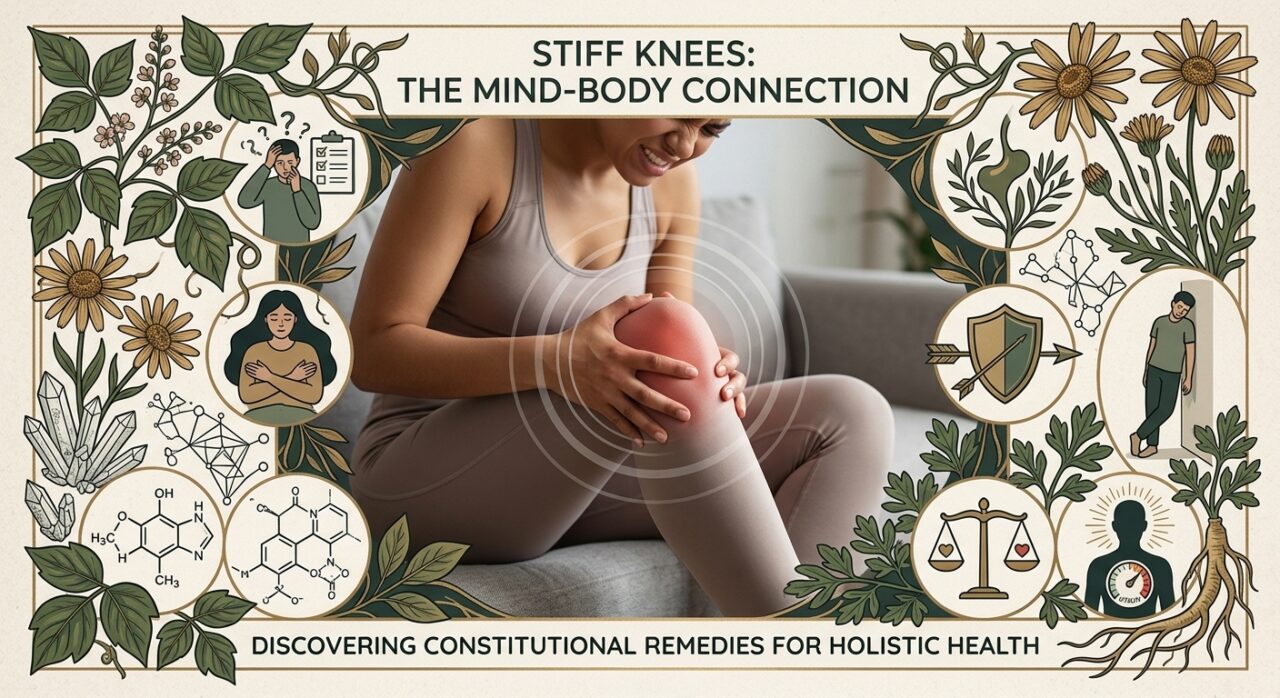
Have you ever noticed how a stressful week can make your body feel physically tighter? Or how a period of grief or worry seems to settle directly into your joints?
In conventional medicine, knee osteoarthritis (OA) is often viewed simply as a wear-and-tear problem—a mechanical breakdown of cartilage accompanied by joint space narrowing, morning stiffness, and that familiar, uncomfortable "clicking" or crepitus. However, homeopathy views these physical changes not as isolated events, but as a reflection of the whole person.
By looking at both your physical joint stiffness and your unique emotional and mental personality, homeopathy aims to identify a constitutional remedy. Finding this remedy is the key to supporting your body’s natural defenses—often described as enhancing your inner vitality and immunity—allowing your system to heal from within.
The Mind-Body Connection: Your Knees and Your Personality
In homeopathy, the mind and body are inseparable. The way you react to stress, your temperament, and your emotional history are considered vital clues. When these mental-emotional states are matched with your physical joint symptoms, it helps homeopaths select a remedy designed for your specific constitution.
Here is how different emotional profiles and mental personalities correspond to the classic knee remedies discussed in recent clinical literature:
1. The Restless Achiever (Rhus toxicodendron)
- The Physical Symptoms: Severe stiffness and rigidity in the knee joint. The pain is worst upon first starting to move (like getting out of bed) but gradually eases as you keep moving.
- The Emotional Personality: People who need Rhus tox often exhibit a restless mind. They find it incredibly difficult to sit still or relax, both mentally and physically. When stressed, they may become anxious, continuously pacing or planning, reflecting the physical need to "keep moving" to avoid stiffening up.
2. The Quiet, Irritable Pragmatist (Bryonia alba)
- The Physical Symptoms: Stitching, sharp joint pain that is severely aggravated by the slightest movement. Relief is found only through complete rest and firm pressure on the joint.
- The Emotional Personality: The Bryonia profile is practical, business-oriented, and highly values security. When ill or in pain, they become quiet, easily irritated, and strongly prefer to be left entirely alone. Their emotional desire to avoid disturbance mirrors their physical need to remain absolutely still.
3. The Stoic Protector (Arnica montana)
- The Physical Symptoms: Chronic soreness, joint tenderness, or stiffness that traces back to an old physical injury, fall, or joint trauma.
- The Emotional Personality: These individuals are incredibly stoic. Even when in severe pain, their default response is often, "I’m fine, please leave me be." They have a strong fear of being touched or approached—both physically (to protect the sore knee) and emotionally (to guard their vulnerability).
4. The Overwhelmed, Hardworking Guardian (Calcarea carbonica)
- The Physical Symptoms: Cracking, dry-sounding joints with a tendency toward early degeneration, swelling, and coldness in the extremities.
- The Emotional Personality: Typically suited for individuals who are reliable, hardworking, and highly responsible, but easily feel overwhelmed by pressure or bad news. They have a tendency to worry about their health, the future, and financial security. This mental fatigue and desire for safety often manifest physically as sluggishness and cold, stiff joints.
5. The Empathetic Advocate (Causticum)
- The Physical Symptoms: Chronic rheumatic stiffness with a progressive loss of muscular strength around the knees, accompanied by burning pains and noisy cracking.
- The Emotional Personality: Those who benefit from Causticum are deeply compassionate individuals who feel the suffering of others acutely. They are often advocates for justice and can become deeply affected by long-standing grief or witnessing unfairness. This emotional rigidity and intensity can mirror the physical stiffness and contractures in their muscles and tendons.
6. The Anxious Strainer (Ruta graveolens)
- The Physical Symptoms: A deep, bruised pain in the knee, particularly affecting the tendons and ligaments, with a sensation as if the joint is sprained or dislocated.
- The Emotional Personality: Individuals requiring Ruta often carry a sense of chronic anxiety and dissatisfaction. They can feel constantly strained, overworked, or physically and mentally exhausted, which reflects directly in the strained, bruised sensation within their ligaments and joint linings.
Supporting Your Inner Immunity and Vitality
Why is finding a constitutional remedy so important?
Homeopathy operates on the principle of stimulating the body's self-healing mechanisms. When a remedy addresses both the physical pathology of osteoarthritis and your unique mental-emotional temperament, it acts as a gentle catalyst.
By supporting your system at this fundamental level, homeopathy aims to:
- Strengthen your overall vitality (often referred to as constitutional immunity).
- Reduce the frequency and severity of joint inflammation flare-ups.
- Improve joint mobility and physical resilience over time.
Instead of temporarily suppressing joint pain, constitutional care seeks to restore balance to your entire system, helping you regain comfort and mobility in a gentle, sustainable way.
Note: Osteoarthritis is a progressive condition. Homeopathy is best utilized as a supportive, complementary approach alongside gentle exercise, weight management, and consultation with qualified healthcare professionals.
擺脫關節僵硬:從情緒與體質出發,順勢療法如何由內而外關顧您的膝關節
您有沒有注意到,每逢壓力沉重的一周,身體也會隨之變得緊繃?又或者,當您陷入憂慮或悲傷時,關節似乎特別容易酸痛不適?
在主流醫學(西醫)中,膝關節退化(退化性關節炎)通常被視為單純的關節磨損問題——主要表現為軟骨逐漸磨損、關節間隙變窄、晨起關節僵硬,以及活動時發出常見的「咔咔」摩擦音(關節摩擦音)。然而,順勢療法(Homeopathy)認為,這些身體上的病變並非孤立發生,而是整個人體健康狀況的縮影。
透過觀察您的膝關節僵硬症狀,並結合您獨特的情緒、思想與性格特徵,順勢療法旨在為您找出最切合個人需要的**「體質處方」(Constitutional Remedy)**。這正是激發身體自我療癒力、提升內在免疫與防禦機制、令身體由內而外逐步康復的關鍵所在。
身心相連:膝關節與性格密碼
在順勢療法的理念中,身心是密不可分的。您面對壓力時的反應、脾氣性格以及情緒經歷,都是處方的重要線索。當這些精神與情緒狀態與您的關節症狀吻合時,便能更準確地挑選出最適合您體質的療劑。
以下是臨床文獻中常用的幾種膝關節療劑,與不同情緒及性格特徵的對應關係:
1. 停不下來的焦慮者 (Rhus toxicodendron / 毒漆藤)
- 身體症狀: 膝關節極度僵硬、緊繃。在停止活動一段時間後(如早上起床時)關節最為疼痛,但隨著持續溫和的活動,痛楚和僵硬感會逐漸減輕。
- 情緒與性格: 適合此療劑的人通常內心感到焦慮、難以安頓。不論在生理還是心理上,他們都覺得很難靜下來休息。當面對壓力時,他們會變得焦慮不安,甚至會不停踱步或規劃事情,這正對應了身體「必須持續活動以防關節僵硬」的特點。
2. 怕受干擾的務實主義者 (Bryonia alba / 瀉根)
- 身體症狀: 關節出現尖銳、針刺般的疼痛,稍微活動就會令痛楚加劇。只有在完全靜止休息,或對患處施加硬物按壓時,疼痛才會有所緩解。
- 情緒與性格: 適合此療劑的人性格務實、重視條理與安全感。每當生病或身體不適時,他們會變得沉默、容易暴躁,極度渴望獨處,不想受到任何打擾。這種精神上拒絕受干擾的狀態,恰好與他們身體上「需要完全靜止、抗拒活動」的表現一致。
3. 堅忍的自我防禦者 (Arnica montana / 山金車)
- 身體症狀: 關節長期酸痛、僵硬,並帶有顯著的壓痛感。這些症狀往往源於陳舊性的物理創傷、跌傷或關節受損歷史。
- 情緒與性格: 這類人性格極為堅忍。即使身處劇痛之中,他們也常掛著一句:「我沒事,不用管我。」他們非常害怕別人觸碰或靠近自己——這既是為了保護酸痛的膝蓋不被碰撞(生理防禦),也是為了掩飾內心的脆弱(心理防禦)。
4. 容易焦慮疲憊的守護者 (Calcarea carbonica / 碳酸鈣)
- 身體症狀: 關節活動時發出乾澀的「咔咔」聲,有早期退化、腫脹的傾向,且經常感到四肢冰冷。
- 情緒與性格: 此體質多見於做事認真盡責、可靠且勤奮的人,但他們在面對壓力和負面消息時容易感到吃力與不堪重負。他們經常為健康、前途或經濟保障感到憂慮。這種心理上的疲累和對安全感的渴求,往往在身體上轉化為代謝遲緩、關節冰冷與僵硬。
5. 富同理心的正義捍衛者 (Causticum / 苛性鈉)
- 身體症狀: 慢性風濕性僵硬,膝關節周邊的肌力逐漸流失,並伴隨燒灼般的疼痛與顯著的關節摩擦音。
- 情緒與性格: 適合此療劑的人心思極為細膩,極具同理心,對別人的痛苦感同身受。他們通常非常重視社會公義,若長期處於悲傷中,或目睹不公義的事情,情緒會大受打擊。這種精神上的執著與剛烈,往往會反映在身體肌肉與肌腱的僵硬與緊縮上。
6. 身心緊繃的憂慮者 (Ruta graveolens / 芸香)
- 身體症狀: 膝關節深處出現酸痛及瘀傷感,尤其是肌腱和韌帶部位,感覺關節像被扭傷或脫臼一般。
- 情緒與性格: 需要此療劑的人往往長期處於焦慮和不滿的狀態中。他們常感到自己心力交瘁、過度勞累,這種心理上的過度拉扯與緊繃,直接呈現在關節韌帶和滑膜部位那種如扭傷般的痛楚中。
提升內在免疫與生命力
為什麼尋找「體質處方」如此重要?
順勢療法的核心原理,在於激發人體與生俱來的自我療癒機制。當處方能同時關顧膝關節的生理病變,以及您獨特的心理與情緒特徵時,它就像一個溫和的催化劑,發揮整體平衡的作用。
透過從根本調理身體,順勢療法旨在:
- 增強整體的生命力(即中醫或自然療法常說的「體質免疫力」)。
- 減少關節發炎及急性腫痛的頻率與嚴重程度。
- 長遠改善關節的活動幅度,提升身體的活動彈性。
constitutional care(體質調理)的目的並非單純暫時壓制關節痛楚,而是希望幫助您的整體系統重建平衡,讓您以溫和、可持續的方式重拾關節的靈活與舒適。
備註:關節退化乃屬漸進性的生理退化。順勢療法作為一種溫和的輔助性療法,建議配合適量運動、體重控制,並諮詢合資格的醫療專業人員,以達致最佳的關節保護效果。
International Journal of Homoeopathic Sciences 2026; 10(6): 11-14
Role of homoeopathy in management of knee osteoarthritis
https://www.homoeopathicjournal.com/articles/2818/10-6-1-300.pdf