
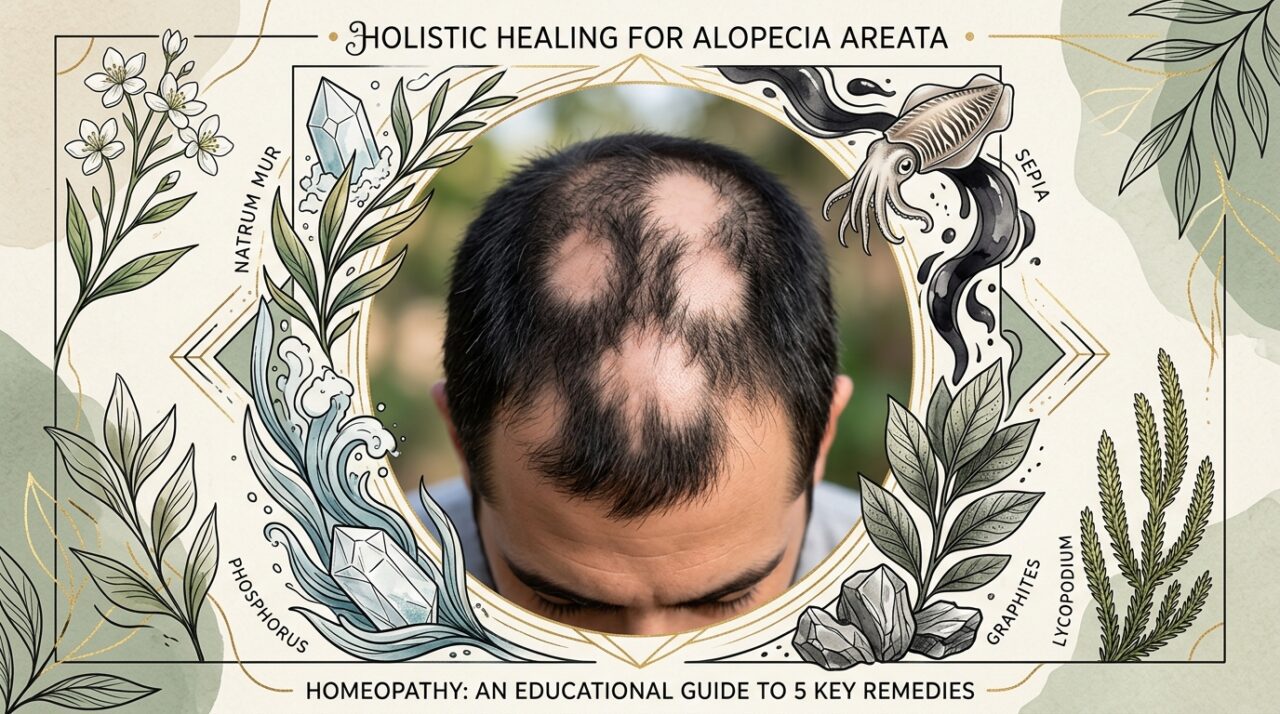
Alopecia Areata, an autoimmune condition characterized by sudden, patchy hair loss, can be emotionally distressing. While conventional medicine focuses primarily on suppressing the immune system, homeopathy offers a holistic approach that seeks to address the root imbalance and stimulate the body's self-healing mechanisms.
As an educator in the field of homeopathy, I invite you to explore how this time-honored system views alopecia areata and how it applies personalized care, taking into account physical symptoms, individual sensitivities (modalities), and the emotional-mental state.
A Deeper Understanding of Autoimmunity
In homeopathy, autoimmunity isn't simply an error in the immune system's function. It's viewed as an external manifestation of an internal disharmony. The body's vital force, which maintains health, has been disrupted, leading it to attack its own tissues (in this case, the hair follicles). The goal of homeopathic treatment is to restore this vital balance.
Because alopecia areata often appears alongside periods of stress, emotional trauma, or significant life changes, the emotional and mental aspects of the individual are pivotal in determining the correct remedy.
Personalized Selection: The Top 5 Remedies
Here, we explore five commonly prescribed homeopathic remedies for alopecia areata, illustrating how they cover physical symptoms, modalities (what makes symptoms better or worse), and the person’s unique mental-emotional profile.
1. Natrum Muriaticum: The Emotionally Sensitive Individual
Physical Symptoms: Hair loss that is patchy and often severe, potentially affecting the head and beard. A key characteristic is when hair loss occurs on the head after grief or emotional shock. The scalp may be greasy or very dry, and there might be a tendency toward dandruff.
Modalities: Symptoms are often worse from warmth, in a warm room, from sun exposure, and near the sea. They are better from lying down perfectly still, being alone, and in cool, open air. There can be a distinct craving for salt.
Emotion & Mind: The "Natrum Mur" individual is typically deeply sensitive and easily hurt, yet they struggle to express their feelings openly. They often bear their sorrows in silence, dwelling on past hurts or grief. They avoid being a burden to others and may dislike being consoled. Anxiety, introversion, and a serious, reserved nature are common.
2. Sepia Officinalis: The Changeable and Tired State
Physical Symptoms: Hair loss that can be patchy or diffuse, often occurring after childbirth, during menopause, or alongside hormonal fluctuations. The scalp can be itchy or oily, and there might be a associated loss of energy. The hair may look lifeless.
Modalities: Symptoms are worse from the cold (especially cold air and drafts), before menstruation, and while sitting or standing perfectly still. They feel better from continued vigorous motion (which provides energy), warm applications, and dry heat. The Sepia patient often feels chilly.
Emotion & Mind: Sepia individuals frequently present with significant physical and mental fatigue, leading to a state of indifference or apathy, even toward loved ones. They can be irritable, easily offended, and seek solitude, feeling overwhelmed by their responsibilities. Mental clarity can be foggy, and they may be prone to weepiness, especially when talking about their feelings.
3. Graphites: The Slow and Stubborn Nature
Physical Symptoms: Hair loss that often occurs on the crown or forehead, leaving hard, scarred-looking patches. The scalp is typically unhealthy, rough, dry, or cracked, and has a tendency to form thick, crusty eczematous eruptions. Fissures may form behind the ears or on the fingertips.
Modalities: Symptoms are worse in the morning, from warmth, and while indoors. They feel better in a cool, dry climate and from covering the affected parts warmly (despite the general aggravation from warmth).
Emotion & Mind: Graphites individuals often exhibit a cierta mental sluggishness or slowness of thought. They can be timid, lack self-confidence, and are prone to sadness and weepiness, especially when hearing music. They are slow to make decisions or express themselves. There is often an underlying feeling of chilliness and poor digestion.
4. Lycopodium Clavatum: The Anxious but Ambitious Profile
Physical Symptoms: Hair loss that often starts prematurely, potentially following digestive disturbances or illnesses. A unique characteristic is that the hair loss might be noticeably worse on the right side of the head, or the right side of the body. The scalp may look prematurely aged, wrinkled, or show early graying.
Modalities: Symptoms are invariably worse between 4-8 PM, from cold (especially cold food and drinks), and lying on the right side. They feel better from warm applications, warm food/drink, and motion.
Emotion & Mind: The Lycopodium individual presents a contradiction: they are often ambitious, intelligent, and highly capable, yet they harbor significant deep-seated anxiety and a lack of self-confidence (especially in social or public situations). They may overcompensate with a demanding or arrogant demeanor. They often fear commitment, change, and being alone, despite seeking periods of solitude.
5. Phosphorus: The Communicative and Bright Spirit
Physical Symptoms: Hair loss that occurs in distinct patches, often with great rapidity. The scalp can be very sensitive, sometimes accompanied by intense itching or a feeling of heat. New hair growth may come in fine or gray initially.
Modalities: Symptoms are worse from twilight/evening, lying on the left side, thunder, and temperature changes. They feel better from cool air, open air, warm applications (locally), and company. The Phosphorus patient is generally very chilly but craves icy cold water.
Emotion & Mind: Phosphorus individuals are characterized by an extremely sensitive, empathetic, and communicative nature. They are often artistic, bubbly, and easily excitable, but also easily overwhelmed by emotional stimuli or environments. They have a strong need for company and consolation and are deeply affected by others' distress. They are prone to quick burnout and anxiety, especially about their health or being alone.
Beyond Patchiness: Achieving Vitality
Homeopathy offers a personalized framework that looks past the surface "patchiness" to the unique pattern of the whole person. By selecting a remedy that resonates with your physical symptoms, individual modalities, and emotional-mental temperament, homeopathy aims to restore overall vitality.
Choosing the right remedy is a precise art that benefits from professional guidance. If you are exploring options for alopecia areata, I encourage you to consult with a qualified homeopath. Together, you can navigate your journey toward dynamic health and well-being.
整體治療:順勢療法應對斑禿(鬼剃頭)的方法
斑禿(Alopecia Areata,俗稱「鬼剃頭」)是一種自體免疫性疾病,其特徵是突然出現斑片狀的脫髮,這會給患者帶來巨大的情緒困擾。雖然傳統醫學主要側重於抑制免疫系統,但順勢療法(Homeopathy)提供了一種整體的(Holistic)方法,旨在解決根本的失衡並刺激身體的自癒機制。
作為順勢療法領域的教育者,我邀請您探索這個歷史悠久的系統如何看待斑禿,以及它如何應用個人化的護理,將身體症狀、個人敏感性(情狀,modalities)以及情緒-精神狀態考慮在內。
更深層地理解自體免疫
在順勢療法中,自體免疫並不僅僅是免疫系統功能上的錯誤。它被視為內部失調的外在顯現。維持健康的身體「生命力」(Vital Force)受到了干擾,導致它攻擊自己的組織(在這種情況下是毛囊)。順勢療法治療的目標是恢復這種生命力的平衡。
由於斑禿通常出現在壓力、情緒創傷或重大生活轉變時期,因此個體的情緒和精神方面是確定正確療劑的關鍵。
個人化選擇:五大療劑
在這裡,我們探討五種常用於治療斑禿的順勢療法療劑,說明它們如何涵蓋身體症狀、情狀(什麼讓症狀更好或更壞)以及個人獨特的精神-情緒概況。
1. Natrum Muriaticum(氯化鈉/食鹽):情緒敏感的個體
身體症狀: 脫髮呈現斑片狀,有時很嚴重,可能影響頭部和鬍鬚。一個關鍵特徵是頭部在悲傷或情緒休克(Emotional Shock)後出現脫髮。頭皮可能油膩或非常乾燥,並可能有頭皮屑傾向。
情狀: 症狀通常因溫熱、在溫暖的房間、日曬以及靠近大海而惡化。因完全靜臥、獨處以及在涼爽、開闊的空氣中而更好。可能有明顯的嗜鹽慾望。
情緒與精神: 「Natrum Mur」個體通常非常敏感且容易受傷,但他們很難公開表達自己的感受。他們通常在沉默中承受悲傷,沉溺於過去的傷害或悲痛。他們避免成為他人的負擔,並且可能不喜歡被安慰。焦慮、內向以及嚴肅、保留的性格很常見。
2. Sepia Officinalis(墨魚汁):多變且疲勞的狀態
身體症狀: 脫髮可以是斑片狀或彌漫性的,通常發生在分娩後、更年期期間或伴隨荷爾蒙波動。頭皮可能發癢或油膩,並可能伴有能量喪失。頭髮可能看起來沒有生氣。
情狀: 症狀因寒冷(特別是冷空氣和過堂風)、經前以及完全靜坐或站立而惡化。因持續劇烈運動(提供能量)、熱敷和乾熱而感覺更好。Sepia 患者通常感到怕冷。
情緒與精神: Sepia 個體經常表現出顯著的身體和精神疲勞,導致對甚至親人也漠不關心或冷漠(Apathy)的狀態。他們可能易怒、容易受傷,並尋求獨處,對自己的責任感到無所適從。精神清晰度可能模糊,並且他們可能容易哭泣,特別是在談論自己的感受時。
3. Graphites(石墨):遲緩且頑固的本性
身體症狀: 脫髮通常發生在頭頂或前額,留下堅硬、看起來像疤痕的斑塊。頭皮通常不健康、粗糙、乾燥或破裂,並有形成厚、結痂的濕疹樣皮疹倾向。耳後或指尖可能形成裂裂。
情狀: 症狀在早上、溫熱以及在室內時惡化。在涼爽、乾燥的氣候中以及溫暖地包裹受影響部分(儘管普遍因溫熱而惡化)而感覺更好。
情緒與精神: Graphites 個體通常表現出某種精神遲緩或思維緩慢。他們可能膽小、缺乏自信,並容易悲傷和哭泣,特別是在聽音樂時。他們在做出決定或表達自己方面很慢。通常有普遍的寒冷感和消化不良。
4. Lycopodium Clavatum(石松):焦慮但有抱負的概況
身體症狀: 脫髮通常過早開始,可能繼發於消化紊亂或疾病。一個獨特的特徵是脫髮可能在頭部的右側或身體的右側明顯更糟。頭皮可能看起來過早老化、有皺紋,或顯示早期灰髮。
情狀: 症狀總是在下午 4-8 點之間、因寒冷(特別是冷食和冷飲)以及躺在右側而惡化。因熱敷、熱食/熱飲和運動而感覺更好。
情緒與精神: Lycopodium 個體表現出矛盾:他們通常有抱負、聰明且能力很強,但他們內心深處隱藏著顯著的焦慮和缺乏自信(特別是在社交或公共場合)。他們可能以苛刻或傲慢的舉止過度補償。他們通常害怕承諾、改變和單獨留下,儘管會尋求獨處的時期。
5. Phosphorus(磷):健談且明亮的精神
身體症狀: 脫髮以明顯的斑塊形式出現,通常速度很快。頭皮可能非常敏感,有時伴有劇烈的瘙癢或發熱感。新髮生長最初可能變細或變灰。
情狀: 症狀因黃昏/傍晚、躺在左側、雷電和溫度變化而惡化。因涼爽空氣、開闊空氣、局部熱敷和陪伴而感覺更好。Phosphorus 患者普遍非常怕冷,但渴望冰冷的水。
情緒與精神: Phosphorus 個體的特點是非常敏感、具同理心且健談的本性。他們通常具有藝術氣質、活潑且容易興奮,但也容易被情緒刺激或環境所壓倒。他們強烈需要陪伴和安慰,並深受他人痛苦的影響。他們容易快速倦怠(Burnout)和焦慮,特別是關於他們的健康或單獨留下。
超越斑片:達成生命力
順勢療法提供了一個個人化的框架,它超越表面的「斑片狀」來觀察整個人的獨特模式。通過選擇一種與您的身體症狀、個人情狀以及情緒-精神氣質產生共鳴的療劑,順勢療法旨在恢復整體的生命力。
選擇正確的療劑是一門需要專業指導的精確藝術。如果您正在探索應對斑禿的選擇,我鼓勵您諮詢合資格的順勢療法醫生。齊心協力,您可以導航走向動態健康和福祉的旅程。