
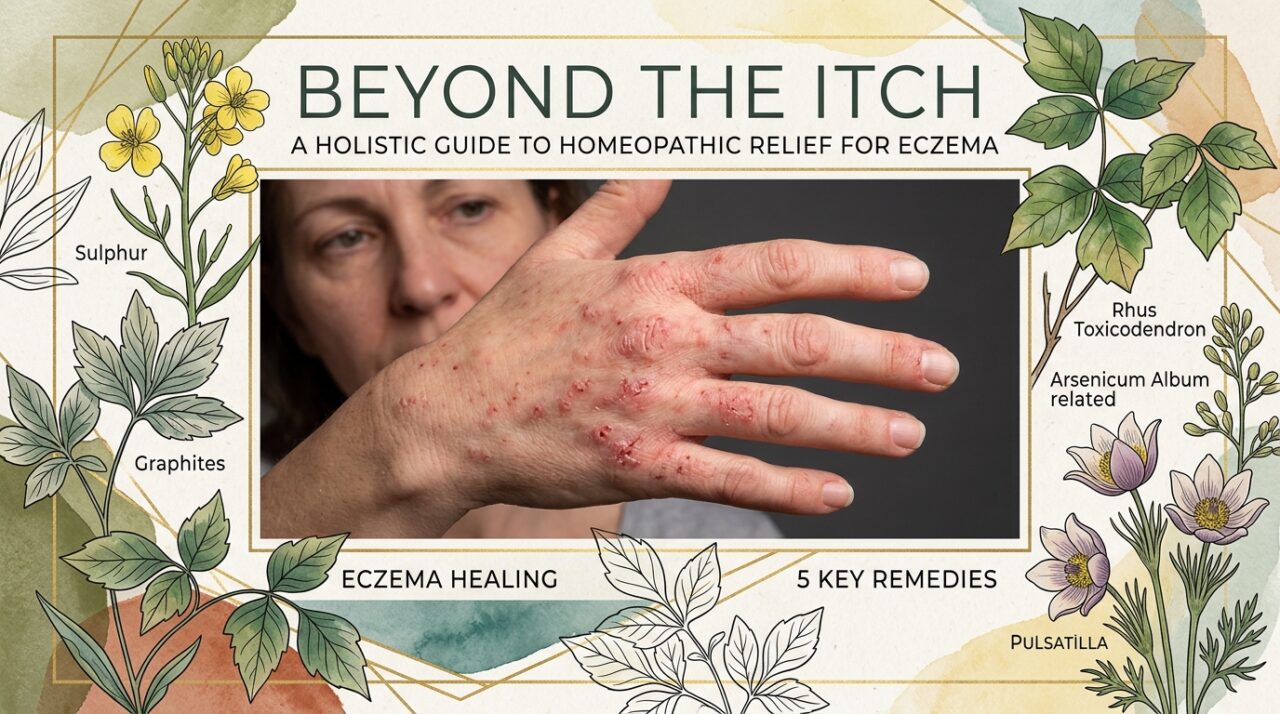
Eczema, a condition marked by inflamed, itchy, and sometimes blistered skin, affects millions worldwide. While conventional treatments often focus on topical creams to suppress symptoms, homeopathy offers a deeply holistic alternative, aiming to address the root causes and restore overall balance from the inside out.
As a copywriter specializing in homeopathy education, I invite you to explore how this time-honored system can offer gentle, effective relief for eczema, touching on physical symptoms, environmental factors (modalities), and the subtle interplay of emotion and mind.
The Homeopathic Philosophy: A Mirror to the Whole Person
In homeopathy, we don't just treat "eczema." We treat you, the individual experiencing it. Eczema isn't merely a skin problem; it's an outward sign of an internal disharmony. Your unique presentation of symptoms, what makes them feel better or worse, and your emotional state are all crucial clues leading to the most appropriate remedy for your vital force.
Unlike suppressive topical treatments, homeopathic remedies are potentized substances that stimulate the body's inherent healing mechanisms, guiding it toward a state of lasting health rather than temporary relief.
Top 5 Homeopathic Remedies for Eczema: A Holistic Profile
Here, we delve into five commonly prescribed homeopathic remedies for eczema, highlighting how they encapsulate physical, dynamic (modality), and emotional-mental aspects.
1. Sulphur: The Hot and Itchy Individual
Physical Symptoms: Eczema characterized by intense itching and burning, often made worse by warmth and washing. The skin typically appears red, dry, and rough, and may develop pustules or discharge a thin, watery fluid. There’s a noticeable tendency toward dry skin in general.
Modalities: Symptoms are invariably worse in a warm bed, from bathing, and wrapped up. They feel better from being in a cool, open-air environment. The "Sulphur itching" typically comes on in paroxysms, especially at night when warm.
Emotion & Mind: The "Sulphur patient" is often described as intellectually curious, philosophical, and possibly a bit self-absorbed or even ragged-looking (though they may not feel so themselves!). They can be irritable when their itching flares, and may have a general disdain for rules and order. There can be an underlying feeling of being unappreciated or a desire to be the center of attention.
2. Graphites: The Damp and Sluggish State
Physical Symptoms: Eczema that is typically rough, hard, and dry, but has a characteristic tendency to exude a thick, sticky, honey-like fluid that dries into yellow crusts. Cracks or fissures often form, especially behind the ears, in the bends of joints, and on the fingertips. The skin appears pale and unhealthy.
Modalities: Symptoms are often worse from warmth, in the morning, and from being indoors. They feel better in a cool, dry climate and from wrapping up warmly (the skin, unlike Sulphur, wants to be covered).
Emotion & Mind: Graphites individuals can tend toward mental sluggishness, sadness, and a lack of self-confidence. They can be prone to weepiness, especially when hearing music, and may feel easily overwhelmed by emotional stimuli. There's often a general feeling of chillyness and slow digestion. They can be slow to express their feelings or make decisions.
3. Rhus Toxicodendron: The Restless and Reactive Nature
Physical Symptoms: Eczema characterized by small, intensely itchy blisters (vesicles) filled with clear fluid, often looking like a rash from poison ivy (from which the remedy is derived). The skin feels red, swollen, and hot. There's a strong, intolerable itch that drives the individual to scratch until the skin bleeds.
Modalities: Symptoms are significantly worse in damp weather, from getting wet, and during periods of rest (unlike many conditions, resting aggravates the Rhus Tox patient). They feel better from continued gentle motion, warm applications, and dry heat. There's an underlying physical restlessness.
Emotion & Mind: Rhus Tox individuals can be intensely restless, physically and mentally. They have difficulty finding a comfortable position and may be constantly on the go. There’s a tendency toward anxiety, apprehension, and a general gloominess, especially during their eczema flare-ups. The pain can be overwhelming, leading to irritability and intolerance.
4. Arsenicum Album: The Anxious and Chilly Soul
Physical Symptoms: Eczema that appears dry, scaly, and often burns intensely (despite the general chilliness of the patient). The skin can become very red, thin, and prone to severe ulceration or crack formation. The itching is intolerable, often described as a fine, prickly sensation.
Modalities: Symptoms are significantly worse at night (especially between 1-3 AM), from cold applications, and in cold, damp weather. They feel better from external warmth (like warm water or blankets) and sitting erect. The Arsenicum patient is generally extremely chilly.
Emotion & Mind: Arsenicum is characterized by deep-seated anxiety, particularly about health, order, and security. They are often fastidious, requiring everything in their environment to be pristine and organized. The intensity of their suffering leads to extreme restlessness, often driving them to move from one place to another. They can be demanding and dependent, fearing being left alone.
5. Pulsatilla: The Changeable and Comfort-Seeking Heart
Physical Symptoms: Eczema that has a characteristic changeability – symptoms can shift quickly in appearance, location, and intensity. The skin may be red and itchy, or damp and peeling. A noteworthy physical sign is a lack of thirst, even during fever or flare-ups.
Modalities: Symptoms are almost always worse in a warm, stuffy room, at night, and from eating rich, fatty foods (especially pork). They feel significantly better in cool, open air, from slow walking, and from consolation or sympathy.
Emotion & Mind: Pulsatilla individuals are characterized by a sweet, gentle, and emotionally expressive nature. They are easily swayed by others, can be prone to weepiness, and have a profound need for attention, consolation, and reassurance. They are often timid and avoid conflict. There’s a noticeable desire for company and a marked improvement in symptoms when they feel supported and cared for.
Embracing a Whole-Person Approach to Skin Health
Homeopathy offers more than just the promise of clearer skin. By addressing the deep-seated imbalances that give rise to eczema, it facilitates a journey toward lasting vitality and emotional resilience. Choosing the correct remedy is a subtle art that hinges on understanding the intricate tapestry of your physical, environmental, and emotional self.
If you are navigating the challenges of eczema, I encourage you to consult with a qualified homeopath. Together, you can unlock your body's innate wisdom, finding gentle, powerful relief that allows your inner light to shine through healthy, radiant skin.
止癢之外:順勢療法全方位濕疹舒緩指南
濕疹(Eczema),這種以皮膚發炎、瘙癢,有時甚至起水泡為特徵的狀況,困擾著全球數百萬人。雖然傳統療法通常側重於使用外用藥膏來抑制症狀,但順勢療法(Homeopathy)提供了一種深刻的整體(全方位)替代方案,旨在從內到外解決根本原因並恢復整體平衡。
作為一名專門從事順勢療法教育的撰稿人,我邀請您探索這個歷史悠久的系統如何為濕疹提供溫和、有效的舒緩,觸及身體症狀、環境因素(情狀,modalities)以及情緒與精神的微細相互作用。
順勢療法的哲學:全人的一面鏡子
在順勢療法中,我們不只是治療「濕疹」。我們治療的是「您」,即正在經歷濕疹的個體。濕疹不僅僅是一個皮膚問題;它是內部失調的外在顯現。您獨特的症狀呈現、讓您感覺更好或更糟的因素,以及您的情緒狀態,都是引導我們找到最適合您生命力(vital force)之療劑的關鍵線索。
與抑制性的外用療法不同,順勢療法療劑是經過潛能化(potentized)的物質,能刺激身體固有的癒合機制,引導其走向持久的健康狀態,而非暫時的緩解。
五大濕疹順勢療法療劑:整體輪廓
在這裡,我們深入探討五種常用的濕疹順勢療法療劑,強調它們如何概括身體、動態(情狀)以及情緒-精神方面。
1. Sulphur(硫磺):發熱且瘙癢的個體
身體症狀: 濕疹的特點是劇烈的瘙癢和灼熱感,通常因溫熱和清洗而惡化。皮膚通常看起來紅腫、乾燥、粗糙,並可能形成膿皰或排出稀薄的水樣流體。整體上有明顯的皮膚乾燥傾向。
情狀: 在溫暖的床上、沐浴後以及被包裹時,症狀總是「惡化」。在涼爽、開闊的空氣環境中會感覺「更好」。「Sulphur 式瘙癢」通常呈陣發性發作,尤其是在晚上溫暖時。
情緒與精神: 「Sulphur 患者」通常被描述為具有智力好奇心、愛好哲學,並且可能有點自我中心,甚至看起來衣衫襤褸(儘管他們自己可能不這麼認為!)。當瘙癢發作時,他們會變得分外易怒,並且可能對規則和秩序普遍蔑視。可能存在一種潛在的未被賞識感,或渴望成為注意力的中心。
2. Graphites(石墨):潮濕且遲緩的狀態
身體症狀: 濕疹通常粗糙、堅硬且乾燥,但具有滲出粘稠、像蜜糖一樣的流體之特徵,這種流體乾燥後會形成黃色痂皮。通常會形成裂口或裂紋,特別是在耳後、關節彎曲處和指尖。皮膚看起來蒼白且不健康。
情狀: 症狀通常因溫熱、在早上以及在室內而「惡化」。在涼爽、乾燥的氣候中以及溫暖地包裹時(皮膚與 Sulphur 不同,喜歡被覆蓋)會感覺「更好」。
情緒與精神: Graphites 個體傾向於精神遲緩、悲傷和缺乏自信。他們容易哭泣,特別是在聽音樂時,並且可能很容易受到情緒刺激的壓倒。通常有普遍的寒冷感和消化緩慢。他們可能在表達感受或做出決定方面表現遲緩。
3. Rhus Toxicodendron(野葛):躁動且反應性的本性
身體症狀: 濕疹的特點是充滿透明流體的小、劇烈瘙癢的水泡(囊泡),通常看起來像毒葛引起的皮疹(該療劑源自毒葛)。皮膚感覺紅腫、腫脹和發熱。有一種強烈、無法忍受的瘙癢,迫使個體搔抓直到皮膚出血。
情狀: 症狀在潮濕天氣、淋濕後以及休息期間會顯著「惡化」(與許多狀況不同,休息會加重 Rhus Tox 患者的病情)。持續的溫和運動、熱敷和乾熱會讓他們感覺「更好」。存在潛在的身體躁動。
情緒與精神: Rhus Tox 個體在身體和精神上都可能非常躁動。他們難以找到舒適的姿勢,並可能不斷移動。傾向於焦慮、憂慮和普遍的憂鬱,特別是在濕疹爆發期間。疼痛可能是壓倒性的,導致易怒和無法忍受。
4. Arsenicum Album(白砒):焦慮且怕 souls 的靈魂
身體症狀: 濕疹看起來乾燥、有鱗屑,並且通常灼熱劇烈(儘管患者整體感覺寒冷)。皮膚可能變得非常紅、薄,並且容易發生嚴重的潰瘍或裂紋形成。瘙癢無法忍受,通常被描述為細微、刺痛的感覺。
情狀: 症狀在夜間(特別是凌晨 1-3 點)、冷敷以及寒冷、潮濕的天氣中會顯著「惡化」。外部溫熱(如熱水或毯子)和端坐會讓他們感覺「更好」。Arsenicum 患者通常極度怕冷。
情緒與精神: Arsenicum 的特點是根深蒂固的焦慮,特別是關於健康、秩序和安全。他們通常很講究,要求環境中的一切都一塵不染、井井有條。痛苦的強度導致極度的躁動,通常迫使他們從一個地方移動到另一個地方。他們可能要求很高且具有依賴性,害怕被單獨留下。
5. Pulsatilla(白頭翁):多變且尋求安慰的心
身體症狀: 濕疹具有特徵性的多變性——症狀在外觀、位置和強度上可以迅速轉變。皮膚可能是紅腫和瘙癢,或者是潮濕和脫皮。一個值得注意的身體特徵是缺乏口渴感,即使在發燒或爆發期間也是如此。
情狀: 症狀幾乎總是在溫暖、悶熱的房間裡、夜間以及進食豐富、脂肪含量高的食物(特別是豬肉)後「惡化」。在涼爽、開闊的空氣中、緩慢行走以及得到安慰或同情時,會感覺顯著「更好」。
情緒與精神: Pulsatilla 個體的特點是甜蜜、溫柔且情緒表達豐富的本性。他們很容易受他人影響,容易哭泣,並且深切需要關注、安慰和重新確認。他們通常很膽小並避免衝突。存在明顯的對陪伴的渴望,並且當他們感到受到支持和照顧時,症狀會有顯著改善。
擁抱全人皮膚健康方法
順勢療法提供的不僅僅是更清晰皮膚的承諾。通過解決導致濕疹的根深蒂固的失調,它促進了邁向持久活力和情緒韌性的旅程。選擇正確的療劑是一門微妙的藝術,取決於對您身體、環境和情緒自我的複雜掛毯的理解。
如果您正在濕疹的挑戰中航行,我鼓勵您諮詢合資格的順勢療法醫生。齊心協力,您可以解鎖身體固有的智慧,找到溫和、強大的舒緩,讓您的內在光芒透過健康、光澤的皮膚閃耀出來。