
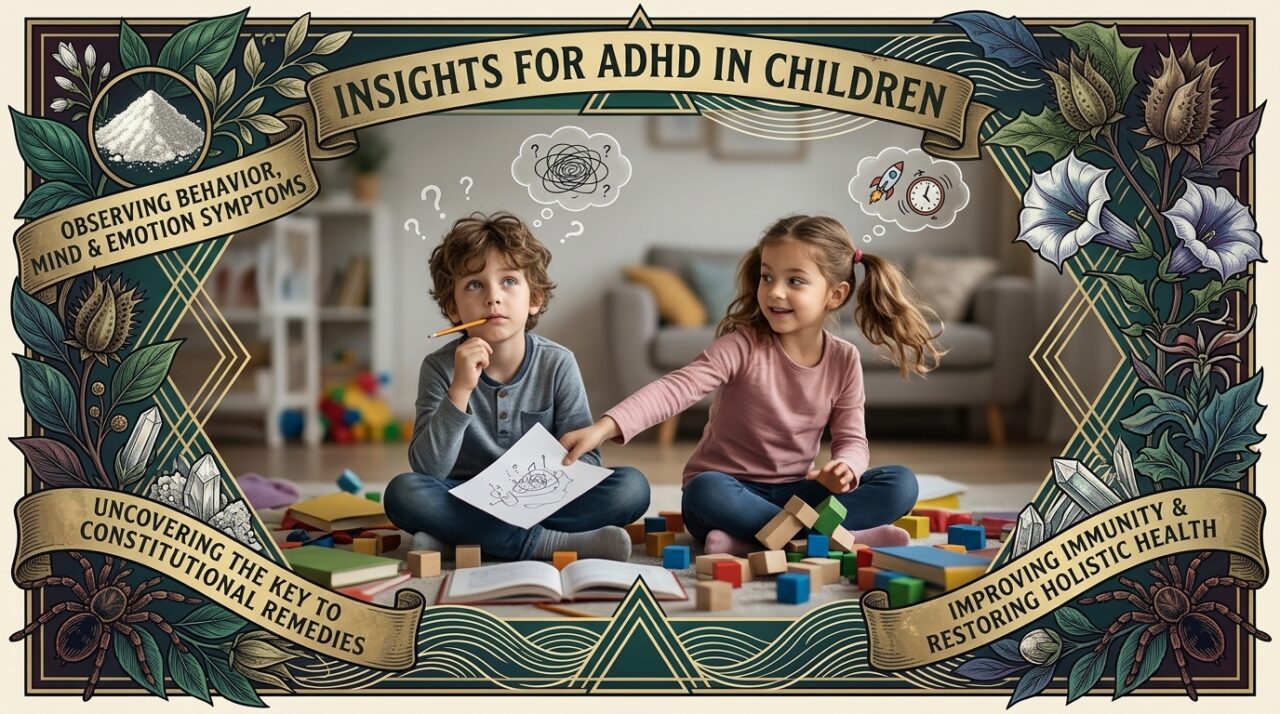
For many parents, receiving an ADHD (Attention-Deficit/Hyperactivity Disorder) diagnosis for their child can feel overwhelming. The standard path often points towards conventional behavioral therapies or long-term medication. While these options can help manage symptoms, many families find themselves searching for a gentler, more integrative approach—one that doesn't just mask behaviors but addresses the root cause and restores the child’s overall vitality.
This is where classical homeopathy offers a unique perspective. Rather than treating ADHD as a single label with a one-size-fits-all prescription, homeopathy views each child as a whole. A recent 18-month clinical study published in the International Journal of Homoeopathic Sciences highlighted this potential. In the study, 30 children diagnosed with ADHD underwent individualized homeopathic treatment. Using the standardized Conners' Parent Rating Scale (CPRS-R), researchers observed a statistically significant reduction in symptom severity over a six-month period, with average scores dropping from 80.77 to 37.17.
The secret behind these promising observations lies in a foundational homeopathic principle: the constitutional remedy.
What is a Constitutional Remedy?
In homeopathy, we do not simply prescribe for "ADHD." Instead, we search for a "constitutional remedy"—a highly individualized medicine selected based on the child's unique physical, mental, and emotional makeup. By finding a remedy that matches the child’s specific constitution, we aim to gently stimulate their self-healing mechanisms, strengthen their inherent immunity, and restore systemic balance from the inside out.
The recent clinical study highlighted that different children required entirely different medicines based on their unique expressions of ADHD. Among the most frequently indicated remedies were Arsenicum album, Stramonium, and Tarentula hispanica.
To help a professional homeopath find this key to your child's health, your observations as a parent are invaluable.
The Parent’s Guide: What to Observe in Your Child
To find the right constitutional remedy, we look far beyond simple inattention or hyperactivity. Here is how you can observe your child’s unique patterns across their mind, emotions, behavior, and physical personality:
1. Patterns of Behavior & Physical Restlessness
Every child with ADHD moves differently. Paying close attention to the nature of their restlessness can provide vital clues:
- The Rhythmic Mover (Tarentula hispanica pattern): Does your child show intense, hurried physical restlessness that seems relieved by music, rhythm, or dancing? Are they constantly tapping, but highly responsive to a beat?
- The Anxious/Restless Tidier (Arsenicum album pattern): Is their restlessness accompanied by a need for order? Do they get anxious if things are out of place, showing a meticulous or fastidious nature despite their difficulty focusing?
- The Sudden/Impulsive Mover (Stramonium pattern): Are their movements sudden, intense, or aggressive when frustrated?
2. The Landscape of Mind & Emotions
The way your child processes their internal world is a crucial piece of the homeopathic puzzle:
- Fears and Anxieties: What scares your child? Do they have an intense fear of the dark or of being left alone (often seen in Stramonium or Arsenicum)?
- Reaction to Consolation: When your child is upset, angry, or throwing a tantrum, how do they respond to comfort? Do they seek out your touch and feel calmed by it, or do they push you away and reject consolation?
- Triggers for Meltdowns: What specifically triggers an emotional outburst? Is it a change in routine, sensory overload, or a feeling of being misunderstood?
3. General Personality & Physical Constitution (The Path to Improved Immunity)
A constitutional remedy aims to strengthen your child’s overall health and immune resilience. To do this, we observe their general physical characteristics:
- Temperature Preferences: Is your child generally "chilly" (wrapping up warm even in mild weather) or "hot-blooded" (kicking off blankets at night)?
- Sleep Patterns: Do they struggle to fall asleep due to a racing mind? Do they experience night terrors or wake up frequently?
- Dietary Cravings & Aversions: Do they crave sweets, spicy foods, or cold drinks? How does food affect their behavior?
Restoring Balance and Building Resilience
When we choose a homeopathic remedy based on this detailed picture, we are not suppressing the child's unique personality. Instead, we are helping their nervous system find its own equilibrium.
As the child's internal stress and behavioral turbulence begin to settle, parents often notice secondary benefits: improved sleep, better digestion, and a stronger, more resilient immune system. By addressing the deep-seated constitutional imbalance, we help the child naturally build better defenses against everyday environmental stressors and minor illnesses.
Every child's developmental journey is unique. While preliminary observational studies show encouraging trends in managing ADHD symptoms through homeopathy, we always recommend working closely with a qualified professional homeopath and your family healthcare provider to create a safe, supportive, and integrative care plan for your child.I. Basic Literature Information
Source: International Journal of Homoeopathic Sciences 2026; 10(6): 490-493
Author: Dr. Varnika Prashad
Background: Attention-Deficit/Hyperactivity Disorder (ADHD) is a common childhood neurodevelopmental disorder, affecting approximately 5–8% of children worldwide. Conventional management strategies primarily rely on behavioral interventions and pharmacotherapy. This prospective observational study aims to evaluate the potential clinical role of "individualized homeopathic medicines" (prescribed based on the patient's totality of symptoms) in mitigating ADHD symptoms in children.
II. Study Design and Subjects
Study Design: An 18-month, non-randomized prospective observational study.
Study Setting: Outpatient and Inpatient Departments of Pt. Jawaharlal Nehru State Homoeopathic Medical College and Hospital, Kanpur, Uttar Pradesh, India.
Participants:
Out of 55 children screened, 30 who met the DSM-5 diagnostic criteria for ADHD (aged 4 to 15 years; 22 males, 8 females) completed at least two months of follow-up and were included in the final analysis.
Distribution of ADHD Subtypes:
Combined type: 14 cases (46.7%)
Predominantly inattentive: 9 cases (30.0%)
Predominantly hyperactive: 7 cases (23.3%)
Exclusion Criteria: Children with severe systemic illness, those undergoing long-term medical treatment for chronic conditions, or those diagnosed with oppositional defiant disorder (ODD) or conduct disorder.
III. Treatment Methods and Outcome Measures
Prescribing Method: Detailed case-taking was conducted according to Hahnemann's Organon of Medicine. Considering the mental and behavioral characteristics of each child, C. Hering's Analytical Repertory of the Symptoms of Mind was utilized to guide remedy selection. A single, individualized homeopathic remedy was prescribed, and its potency and dosage were adjusted during follow-up based on the clinical response.
Outcome Measure: Symptom severity was assessed using the Conners' Parent Rating Scale-Revised (CPRS-R) at baseline (before treatment) and after six months of treatment.
IV. Results
1. Change in Symptom Scores (CPRS-R)
Mean baseline (pre-treatment) T-score: 80.77 ± 8.09
Mean post-treatment (6 months) T-score: 37.17 ± 15.29
Mean reduction: 43.60 points
Statistical Analysis: The paired t-test demonstrated a highly statistically significant improvement (t = 15.13, df = 29, p < 0.0001; 95% Confidence Interval: −49.49 to −37.71), indicating a meaningful reduction in ADHD symptom severity across all subtypes.
2. Frequently Prescribed Remedies
A total of 12 different homeopathic remedies were prescribed to the 30 children during the study. The most frequently indicated remedies were:
Arsenicum album: 4 cases (13.3%)
Stramonium: 4 cases (13.3%)
Tarentula hispanica: 4 cases (13.3%)
Followed by Calcarea carbonica (3 cases, 10.0%) and Lachesis mutus (3 cases, 10.0%).
V. Discussion and Conclusion
Study Conclusion: This preliminary prospective observational study indicates that individualized homeopathic treatment based on mental and behavioral characteristics is associated with a reduction in the severity of ADHD symptoms in children.
Study Limitations: The author noted several limitations in the paper, including the absence of a parallel control group, a small sample size (only 30 cases), and a high reliance on subjective parent-reported outcomes. Therefore, these clinical findings should be interpreted with caution.
Recommendations for the Future: It is recommended that larger randomized controlled trials (RCTs) with longer follow-up periods and parallel control groups be conducted in the future to further explore and validate the clinical efficacy and scientific basis of individualized homeopathy in managing pediatric ADHD.
"Effectiveness of individualized homoeopathic medicines in children with attention deficit/hyperactivity disorder: A prospective observational study " by Varnika Prashad
https://www.homoeopathicjournal.com/articles/2893/10-6-72-902.pdf
啟迪寧靜:以個體化整體療法支援專注力不足/過動症(ADHD)兒童
對於許多家長而言,得知孩子確診專專注力不足/過動症(ADHD)可能會感到手足無措。常規的治療方向通常指向行為治療或長期服用西藥。雖然這些方法能幫助控制症狀,但不少家庭仍希望尋求一種更溫和、更具整體性的輔助方案——一種不單是掩蓋行為表現,而是能從源頭調理、恢復孩子整體生命力的療法。
這正是古典順勢療法(Homeopathy)的獨特之處。順勢療法並不將 ADHD 視為單一標籤並給予千篇一律的處方,而是將每個孩子視為一個獨立的整體。最近發表於《國際順勢療法科學學雜誌》一項為期 18 個月的前瞻性臨床觀察研究便印證了這一點。在該研究中,30 名確診 ADHD 的兒童接受了個體化的順勢療法調理。透過標準的「康納氏家長評量表修訂版」(CPRS-R)進行評估,研究人員觀察到,在六個月的調理期內,孩子的症狀嚴重程度出現了統計學上的顯著降低,平均分數從 80.77 分降至 37.17 分。
這些正面臨床觀察背後的秘訣,在於順勢療法的一個核心原則:尋找「體質藥劑」(Constitutional Remedy)。
什麼是「體質藥劑」?
在順勢療法中,我們不會僅僅針對「ADHD」這一個診斷名詞來開藥,而是尋找「體質藥劑」——這是一種根據孩子獨特的身體、心理和情緒特徵,因人而異、高度個體化配製的天然調理劑。透過找出與孩子特定體質相契合的藥劑,旨在溫和地啟動孩子自身的自癒機制,增強其內在免疫力,並由內而外恢復系統的平衡。
上述的臨床研究指出,不同的孩子因其 ADHD 症狀的獨特表現,所需的調理藥劑完全不同。其中最常開立的藥劑包括 Arsenicum album(白砒)、Stramonium(曼陀羅)和 Tarentula hispanica(西班牙狼蛛)。
家長在日常生活中的細心觀察,正是協助專業順勢療療師為孩子尋找這把「健康鑰匙」的關鍵。
家長觀察指南:如何解讀孩子的行為與情緒
要找到合適的體質藥劑,我們的視線需要超越簡單的「注意力不集中」或「過動」。家長可以從以下幾個維度,仔細觀察孩子在心智、情緒、行為及身體特質上的獨特表現:
1. 行動模式與身體的過動表現 (Behavior & Restlessness)
每個過動症孩子的活動方式都不盡相同。留意他們活動時的具體特徵,能提供非常重要的線索:
- 節奏型律動(Tarentula hispanica 藥劑特徵):孩子是否表現出急躁、匆忙的身體過動,但一聽到音樂、節奏或在跳舞時,情緒便似乎有所舒緩?他們是否不停擺動身體,但對節拍反應極為靈敏?
- 焦慮型整潔(Arsenicum album 藥劑特徵):孩子的過動是否伴隨著對秩序的強烈要求?如果物品沒有放好,他們會否感到焦慮?儘管他們難以集中注意力,但在日常生活中是否展現出過度注重細節或追求完美的傾向?
- 突發/衝動型(Stramonium 藥劑特徵):在遇到挫折或情緒爆發時,孩子的動作會否顯得非常突然、劇烈甚至帶有攻擊性?
2. 心智與情緒表現 (Mind & Emotions)
孩子如何處理自己的內心世界,是順勢療法中不可或缺的一環:
- 恐懼與焦慮:什麼事情會令孩子感到害怕?他們是否極度怕黑,或害怕獨處(這在 Stramonium 或 Arsenicum 中較為常見)?
- 對安慰的反應:當孩子傷心、生氣或發脾氣時,他們對家長的安撫有何反應?他們是渴望擁抱並在安慰下平靜下來,還是會推開家長、抗拒任何安撫?
- 情緒爆發的誘因:是什麼具體事情觸發了孩子的情緒失控?是日常作息的改變、感官過載(如太吵鬧),還是覺得自己不被理解?
3. 整體個人特質與身體體質 (Personality & Immunity)
體質藥劑的最終目的是提升孩子的整體健康與免疫防禦力。為此,我們需要觀察孩子基本的生理特徵:
- 寒熱體質:孩子平常是偏向「怕冷」(即使天氣溫和也要穿多件衣服)還是「怕熱」(睡覺時經常踢被子)?
- 睡眠質素:他們是否因腦海不停運轉而難以入睡?是否有夜驚或經常在半夜驚醒的情況?
- 飲食偏好:他們是否特別偏愛甜食、辛辣食物或冰凍飲品?不同的食物對他們的行為表現有何影響?
恢復內在平衡,建立免疫韌性
當我們根據這些細緻的觀察,為孩子配製出契合其體質的順勢藥劑時,我們並非在壓抑孩子的獨特個性,而是協助他們的自主神經系統尋回自身的平衡。
隨著孩子的內在壓力和行為波動逐漸平息,家長往往會觀察到其他的正面轉變:例如睡眠質素提升、消化系統改善,以及整體的免疫抵抗力增強。透過調理深層的體質失衡,能幫助孩子在面對日常環境壓力或季節轉變時,建立起更佳的身體防禦力。
每個孩子的成長旅程都是獨一無二的。儘管前瞻性觀察研究顯示順勢療法在輔助管理 ADHD 症狀上呈現鼓勵性的趨勢,我們仍建議家長應與合格的專業順勢療療師及家庭醫生緊密合作,為孩子制定一個安全、溫和且具支持性的整體健康調理計劃。
一、 文獻基本資訊
來源:《國際順勢療法科學學雜誌》(International Journal of Homoeopathic Sciences 2026; 10(6): 490-493)
作者:Dr. Varnika Prashad
研究背景:注意力不足過動症(ADHD)是一種常見的兒童神經發育障礙,全球患病率約5-8%。常見的常規管理方法包括行為干預與藥物治療。本前瞻性觀察研究旨在評估「個體化順勢療法藥物」(根據患者整體症狀表現進行針對性處方)在緩解兒童ADHD症狀上的潛在臨床作用。
二、 研究設計與對象
研究設計:一項為期18個月的非隨機、前瞻性觀察研究(Non-randomized prospective observational study)。
研究地點:印度北方邦坎普爾(Kanpur)Pt. Jawaharlal Nehru 邦立順勢醫學院暨醫院的門診與住院部門。
受試者: 共篩選了55名兒童,最終有30名符合DSM-5診斷標準的ADHD患兒(年齡在4至15歲之間,其中男童22人,女童8人)完成了至少兩個月的隨訪並納入最終分析。
ADHD分型分佈: 混合型(Combined type):14例(46.7%)
注意力不集中型(Predominantly inattentive):9例(30.0%)
過動-衝動型(Predominantly hyperactive):7例(23.3%)
排除條件:伴有嚴重系統性疾病、正在接受長期慢性疾病治療,或被診斷伴有對立反抗症(ODD)或品行障礙(Conduct disorder)的患兒。
三、 治療方法與評估指標
處方方法:根據哈尼曼(Hahnemann)的《醫學管見》(Organon of Medicine)進行詳細病史採集。結合患兒的心智、行為特徵,運用赫林(C. Hering)的《精神症狀分析索引》(Analytical Repertory of the Symptoms of Mind)進行藥劑選擇,處方單一、個體化的順勢藥劑,並在隨訪中根據病情調整稀釋度(Potency)和劑量。
評估指標:在基線(治療前)和治療6個月後,使用「康納氏家長評量表修訂版」(Conners' Parent Rating Scale-Revised, CPRS-R)進行評分,評估症狀嚴重程度的變化。
四、 研究結果
1. 症狀評分變化(CPRS-R)
基線(治療前)平均 T分數:80.77 ± 8.09
治療6個月後平均 T分數:37.17 ± 15.29
平均降幅:43.60分
統計學分析:配對t檢定(paired t-test)顯示此改善具備高度顯著的統計學差異(t = 15.13, df = 29, p < 0.0001; 95% 信賴區間: −49.49 至 −37.71),提示患兒的ADHD症狀顯著減輕,且此改善涵蓋了所有的ADHD亞型。
2. 常用藥劑頻率
研究期間共對30名患兒處方了12種不同的順勢藥劑,其中最常用的藥劑包括:
Arsenicum album(白砒):4例(13.3%)
Stramonium(曼陀羅):4例(13.3%)
Tarentula hispanica(西班牙狼蛛):4例(13.3%)
其次為 Calcarea carbonica(碳酸鈣,3例,10.0%)和 Lachesis mutus(南美蝮蛇,3例,10.0%)。
五、 討論與結論
研究結論:本項初步的前瞻性觀察研究顯示,基於精神和行為特徵的個體化順勢療法藥物治療,在臨床評估中與兒童ADHD症狀嚴重程度的降低具有相關性。
研究局限性:作者於文中指出本研究存在多項限制,包括無平行對照組、樣本量偏小(僅30例)、以及評估指標高度依賴家長主觀報告等。因此,目前的臨床發現應予以謹慎解讀。
未來建議:有必要在未來開展更大樣本量、更長隨訪期且設有對照組的隨機對照試驗(RCT),以進一步探討與證實個體化順勢療法在小兒ADHD管理中的具體療效與科學依據。
"Effectiveness of individualized homoeopathic medicines in children with attention deficit/hyperactivity disorder: A prospective observational study " by Varnika Prashad
https://www.homoeopathicjournal.com/articles/2893/10-6-72-902.pdf